Roses are hands-down one of the most popular Valentines gifts, but in East Tennessee it's just too Zone 7 gardeners -- pruning and shaping. If you live somewhere else, the following guidelines can be used at the time of year that's best for pruning roses in your area. For instance, in the London, England area, gardeners should give their roses a hard prune in October rather than February.
early to practically grow our own for the holiday. However, there is a vitally important bit of rose maintenance that should be done right around Valentines day for
Trimming your rose bushes now will help improve the shape of the plant, decrease disease and pest issues by improving air circulation, and even make for better blooms later in the year. Rose pruning is perceived as a daunting and difficult task for many of the homeowners I've spoken to. Those afraid to research or ask for a little help may hedge their bushes, cut the canes right to the ground (yikes!), or just leave them untouched year after year. The truth is, proper rose pruning is simple, fun, and doesn't take terribly long if you only have a handful of shrubs.
What you'll need
To get started, you'll need a pair of sharp bypass pruners (please please please don't use hedging shears or loppers!) and some thick and durable gardening gloves. It's a good idea to wear a long sleeved jacket, long pants, and closed toed shoes. There is a certain finesse to cutting a rose without being scratched, but I just don't have it. Some of the more nasty scratches can last a long while or even scar; so it's a good idea to dress appropriately.
If you're cutting more than one rose bush, it's also wise to have a bottle of alcohol or some alcohol wipes ready to sterilize your pruners between plants. Professional rose gardeners will actually sterilize shears between individual cuts, but for most home gardeners in most circumstances it's sufficient to clean between plants.
Nip it in the bud
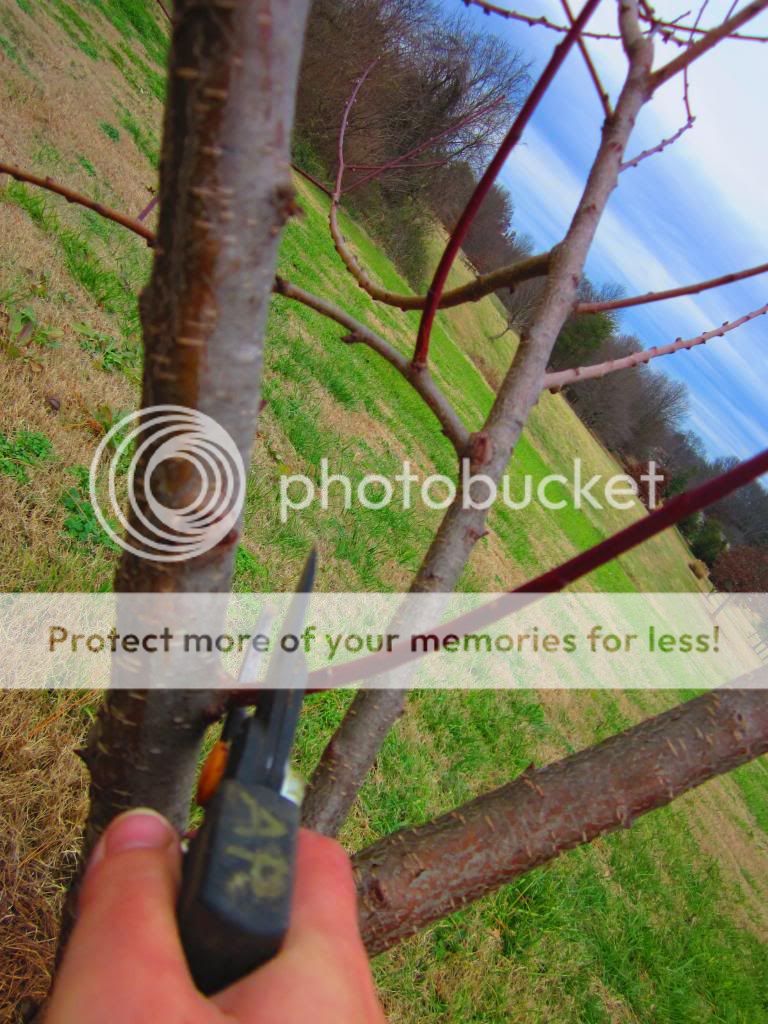
Before you make your first snip, it's vitally important that you are able to recognize a bud. Roses may have raised, red leaf buds that are ready to sprout. Lower down the rose canes there are also dormant buds that are flat and blend in with the stem. The buds are located right above the small lines that run horizontally along some sections of the stem.
When you cut, it's important to cut just above the bud. Why? This bud will sprout the new growth for the shrub later in the year. Avoid making flat cuts; instead, cut at an angle. This will cause water to run off the cut more easily.
The side of the cane that the bud is facing is typically the direction the new stem will grow. That means that cutting to any bud just won't do. Choosing buds that face the inside of the plant will result in a congested shrub that will be more susceptible to pests and diseases later in the growing season. When you cut, look for buds that face the outside of the plant. This will improve air circulation, and the blooms will be easier to see and enjoy.
Cut it out
Now that you have all your tools and you're able to recognize a bud, it's time to get to work. Begin by cutting large canes down to between 1 and 2 feet from the ground. Remember to prune at an angle above any outside facing buds. Next, all but the smallest canes to the same height. Now remove any of the small, spindly branches that are growing from the base of the plant. Finally, prune out the Three D's -- any dead, diseased, or damaged growth that may be remaining.
Tidy up
Congratulations! You're now a rose pruning expert! But before going inside to warm up and celebrate, you need to remove all of the debris and green waste. As a group, roses tend to be more prone to pests and diseases than other shrubs. Any litter from last year that remains below the rose bush may be harboring insects, eggs, or bacteria that could infect next year's growth. Go ahead and clean that up now.
Unless you practice hot composting (temperatures above 135 degrees Fahrenheit for days at a time), your rose trimmings shouldn't go in your compost bin. Insects and bacteria could survive cold composting and infest your garden next year. The best things to do with rose waste is to burn it in a brush pile or throw it away.
Stop and smell the roses
Now that you've put all this work into rose maintenance while the shrubs are dormant, it would be a shame for the blooms to go unnoticed later in the year. If you're anything like me, it's easy to get caught up in garden maintenance (and life in general) and miss out on the whole reason why you put all the work into your garden in the first place -- to enjoy it! Go ahead and mark your calendar for this summer, and leave yourself a reminder to stop and smell the roses.
To see more helpful photos, be sure to check out the album "Roses are Red" on the Plante on Plants Facebook page.
Questions? Comments? Have anything to add? Please post a comment below or shoot me an Plante on Plantes. Thanks for reading!

 |
| Pruning and shaping in dormancy can result in better rose blooms during the growing season |
Trimming your rose bushes now will help improve the shape of the plant, decrease disease and pest issues by improving air circulation, and even make for better blooms later in the year. Rose pruning is perceived as a daunting and difficult task for many of the homeowners I've spoken to. Those afraid to research or ask for a little help may hedge their bushes, cut the canes right to the ground (yikes!), or just leave them untouched year after year. The truth is, proper rose pruning is simple, fun, and doesn't take terribly long if you only have a handful of shrubs.
What you'll need
To get started, you'll need a pair of sharp bypass pruners (please please please don't use hedging shears or loppers!) and some thick and durable gardening gloves. It's a good idea to wear a long sleeved jacket, long pants, and closed toed shoes. There is a certain finesse to cutting a rose without being scratched, but I just don't have it. Some of the more nasty scratches can last a long while or even scar; so it's a good idea to dress appropriately.
If you're cutting more than one rose bush, it's also wise to have a bottle of alcohol or some alcohol wipes ready to sterilize your pruners between plants. Professional rose gardeners will actually sterilize shears between individual cuts, but for most home gardeners in most circumstances it's sufficient to clean between plants.
Nip it in the bud
Before you make your first snip, it's vitally important that you are able to recognize a bud. Roses may have raised, red leaf buds that are ready to sprout. Lower down the rose canes there are also dormant buds that are flat and blend in with the stem. The buds are located right above the small lines that run horizontally along some sections of the stem.
When you cut, it's important to cut just above the bud. Why? This bud will sprout the new growth for the shrub later in the year. Avoid making flat cuts; instead, cut at an angle. This will cause water to run off the cut more easily.
 |
| It's important to be able to recognize a rose bud before you make your first cut! |
Cut it out
Now that you have all your tools and you're able to recognize a bud, it's time to get to work. Begin by cutting large canes down to between 1 and 2 feet from the ground. Remember to prune at an angle above any outside facing buds. Next, all but the smallest canes to the same height. Now remove any of the small, spindly branches that are growing from the base of the plant. Finally, prune out the Three D's -- any dead, diseased, or damaged growth that may be remaining.
Tidy up
Congratulations! You're now a rose pruning expert! But before going inside to warm up and celebrate, you need to remove all of the debris and green waste. As a group, roses tend to be more prone to pests and diseases than other shrubs. Any litter from last year that remains below the rose bush may be harboring insects, eggs, or bacteria that could infect next year's growth. Go ahead and clean that up now.
Unless you practice hot composting (temperatures above 135 degrees Fahrenheit for days at a time), your rose trimmings shouldn't go in your compost bin. Insects and bacteria could survive cold composting and infest your garden next year. The best things to do with rose waste is to burn it in a brush pile or throw it away.
Stop and smell the roses
Now that you've put all this work into rose maintenance while the shrubs are dormant, it would be a shame for the blooms to go unnoticed later in the year. If you're anything like me, it's easy to get caught up in garden maintenance (and life in general) and miss out on the whole reason why you put all the work into your garden in the first place -- to enjoy it! Go ahead and mark your calendar for this summer, and leave yourself a reminder to stop and smell the roses.
To see more helpful photos, be sure to check out the album "Roses are Red" on the Plante on Plants Facebook page.
Questions? Comments? Have anything to add? Please post a comment below or shoot me an Plante on Plantes. Thanks for reading!
 |
| My pet rabbit Zoro is always up for some pruning |