Monday, March 18, 2013

Quick and Dirty Tips for Tree Planting

I apologize for falling behind on blogging.  School this semester has not left a lot of free time for writing, but I do want to continue with regular posts.  So, in the spirit of brevity, please enjoy the following quick and dirty tips for planting trees.  Stay tuned for the quick and dirty tips for pruning.

Timing is Everything
Cool winter months is a great time to plant dormant trees and shrubs.  Without the burden of green foliage that requires a constant flow of water, woody specimens are able to develop a healthy root system.  The earlier in the winter that you plant your trees, the more time their roots have to develop, and the better prepared the trees are to withstand summer heat.  In Knoxville, March is about the latest that I would recommend planting trees and shrubs.
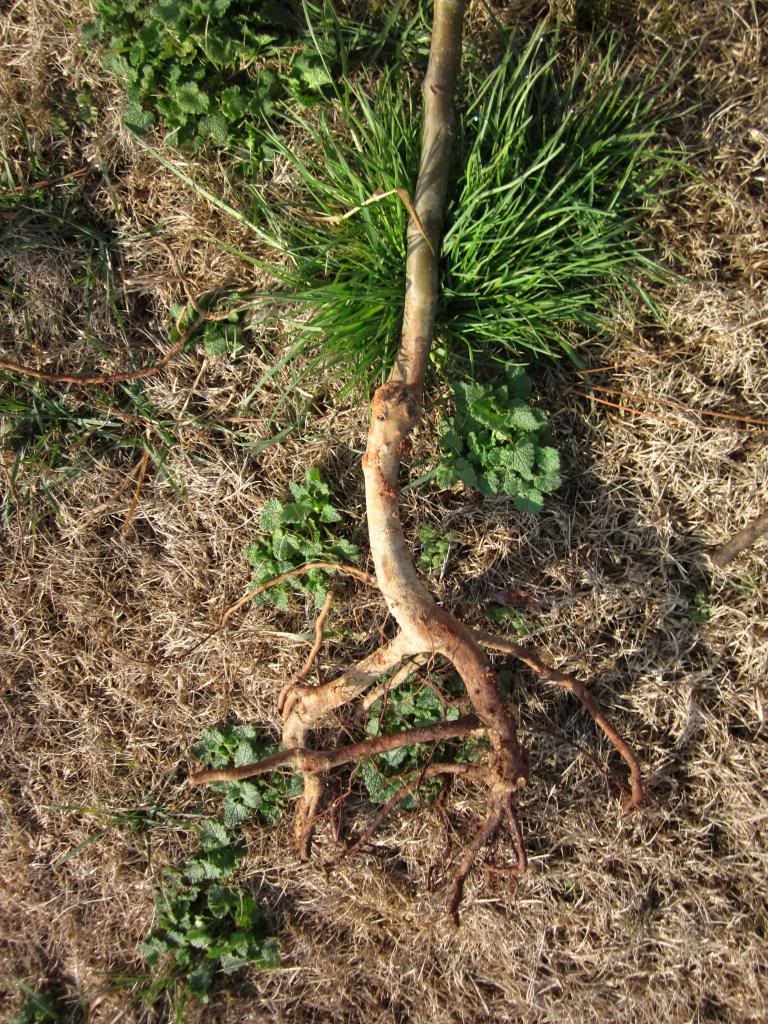
A "bare root" tree is exactly what it sounds
like -- there is not soil around the roots.
Container or Bare-Root?
Many homeowners buy trees and shrubs grown in containers from a nursery or box store.  While I am all for supporting your local nursery, I prefer to plant "bare root" woody specimens.  Bare root plants are exactly what they sound like -- there is no soil around their roots.  In my experience, bare root trees and shrubs are less expensive, establish faster and perform better than container grown plants.  Bare root specimens can be ordered through the internet or catalogue from a reputable source.  Ball and burlap is another option as well.

Eliminate the Competition
Although most weeds in and of themselves may not be a threat to successful growth of trees and shrubs, their presence near the trunk is undesirable for a couple reasons.  Aesthetically, you may not want weeds cluttering up the "drip zone," or area beneath the foliage of your tree.  If the tree is to be planted in an area that is mowed regularly -- like the front yard -- if there are weeds and grass growing near the trunk you may risk having your tree damaged by a weed eater or lawn mower.  For these reasons, it is a good idea to use your shovel to remove existing weeds and grass from the area around your tree prior to planting.
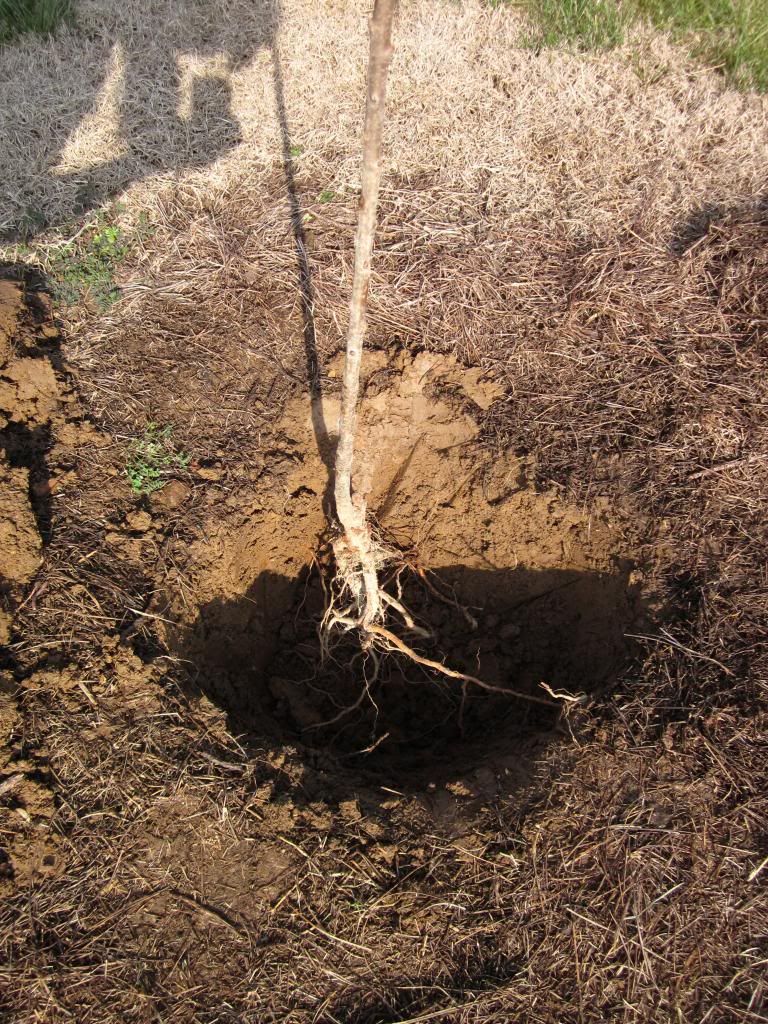
Make sure your hole is at least big enough
to hold all of the plant's roots.
Dig Baby, Dig
If your tree is a container tree, make sure your hole is at least bigger than the plant's container.  Some people suggest digging a hole that is twice as wide.  I haven't noticed much of a short or long term difference between the growth of trees that were planted in sufficient size and larger holes.  If you are planting a bare root tree or shrub, make sure the hole is large enough to sufficiently hold all the roots.

To Amend or Not to Amend
Some people amend the soil in the hole with potting soil, good topsoil, sand, compost, or fertilizer.  I like to think of it this way -- in a year, your tree's roots are going to expand far beyond that zone.  Why put off the inevitable?  In some cases, amending the soil can actually hurt the tree's development.  For example, if a heavy clay soil is amended for a tree, the slow draining clay can create a basin that holds water around the tree's roots and causes them to rot.  However, if you are growing a tree or shrub that has a specific soil pH (acidity or alkalinity) requirement, the soil will need to be amended with sulfur to lower pH and make more acidic or lime to raise pH and make more alkaline in order for the tree to grow properly.
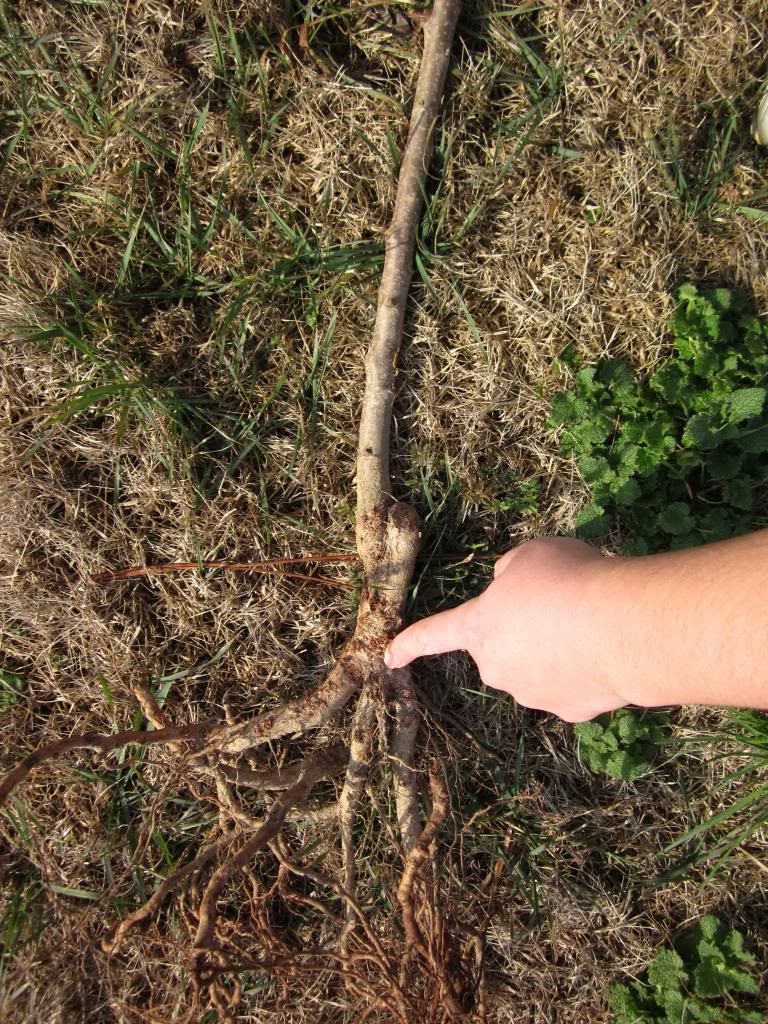
Look for the "root / shoot" junction before
planting your tree.
Look for the Root-Shoot Junction
There have been times when I've planted a tree and a year later it dies inexplicably.  My sleuthing did not turn up any fatal pest or disease problems.  The cause of the tree death was actually being planted too low or too high.  Now when I plant trees, I keep my eyes peeled for something called the "root / shoot junction."  Look on the trunk of your tree for the spot where the roots become the roots and the shoot becomes the shoot.  When you plant your tree, make sure the roots are below ground and the trunk is above ground.  Most of the time, the soil line of container grown trees is already at the root / shoot junction, but double check to be sure.

Add Mulch
Mulch is important for weed suppression, protecting the trees from lawn mower or weed eater damage, and just plain old looks pretty.  For new beds, add about 3 inches of mulch under the drip zone of the tree.  After mulching, be sure to pull the mulch away from the trunk of the tree.  Be sure to avoid the "mulch volcano" look -- that is not attractive and it is unhealthy for your tree.

Thanks for reading and stay tuned for the quick and dirty tips for pruning, hopefully coming up soon!

If you have any questions, ideas, or comments, please don't hesitate to leave a comment or send me an email.

To see more of my tree maintenance pictures, check out my photobucket story.

Do you prefer container trees or bare-root?  What tips and tricks have made your trees and shrubs grow successfully?


The Knoxville Botanical Garden and Arboretum's "Every Child Outdoors" Fruit Grove

Wednesday, January 2, 2013

Pony tail palm, a living statute that adds interest to any residence

A large Beaucarnea trunk surrounded by tropical foliage
at Nashville's Opryland Atrium, 2010
When the garden slows down in the winter, many gardeners turn their attention to their houseplants.  If you're anything like I am, caring for a green, living houseplant is like a form of gardening life support -- it keeps me focused through the winter.

One of my favorite interior plants is Beaucarnea recurvata, more commonly known as pony tail palm or elephant-foot tree.  The pony tail palm can develop lovely curly foliage that cascades over the edge of whatever piece of furniture it's sitting on.  The trunk has a nice gray bark, and the base of the plant will swell creating a bottle-neck appearance.

Pony tail palms are extremely slow growing, but given time a tree can reach 30 feet in height.  Beaucarnea recurvata prefers a high light situation when
I strike a pose with a large pony tail palm in
 Nashville's Opryland Atrium, 2010.
grown indoors, and will grow best by a sunny window.  Native to the deserts of the North American South and South West, pony tail palm does not require a lot of water.  The base of the plant actually serves as a water reservoir.  To prevent over-watering, I tend to wait until the base starts to get a puckered, wrinkly appearance instead of watering when the soil is dry.

Small specimens can be purchased from a local garden center, box store, florist, or grocery store.  Between the low maintenance requirements and statuesque form, pony tail palm is a great choice for any residence.

If you have any questions, ideas, or suggestions, leave a comment or shoot me an email.

How has pony tail palm grown for you?  What's your favorite interior plant?  How do you beat the winter blues?


My small pony tail palm serves as a living statute in my residence.

As seen from this specimen grown in Nashville's Opryland Atrium, pony tail palms can be multi-stemmed.

Friday, December 14, 2012

Tomatoes in December? Grow the Gift of an Edible Ornament

I love the holidays.  Every December I look forward to all the Christmas trees, wreaths, cookies and ornaments   But holiday traditions don't have to be so... traditional.  If you want to give a gift with WOW factor this year, consider the 'Sweet n' Neat' tomato.

'Sweet n' Neat' Tomatoes make a
lovely, living edible ornament
'Sweet n' Neat' tomatoes are a compact variety that is content to grow on a sunny windowsill.  These edible ornaments will brighten any home or office with small red, scarlet, or yellow cherry tomatoes -- even during the winter.  Pot size isn't a major issue for 'Sweet n' Neat' -- I've heard of instances where this variety has developed fruit while still growing in the small nursery cell pack weeks before a sale.

I first heard of this variety while attending the Perennial Plant Association's 2012 symposium.  In the talk "Food for Thought, Edibles in the Landscape," Lloyd Traven of Peace Tree Farm shared his edible ornament idea with the audience, and he suggested 'Sweet n' Neat' as a good variety for the concept.

Working with Knoxville's Austin-East High School, we grew 200 edible ornaments as a fundraiser for their garden program.  There was immediate and intense interest!  This has been a very popular concept for a plant sale, and I'd definitely recommend other schools that have access to a greenhouse try this in the future.

A rosemary tree is another edible
and living holiday gift idea.
If you're looking for some seed for your home garden, there are many websites that offer yellow, red, and scarlet fruiting 'Sweet n' Neat' tomato seeds.  If you intend to grow the plants for a fundraiser, there aren't many retailers that currently sell this variety in bulk.  However, 2B Seeds does sell all three colors of 'Sweet n' Neat' in quantities of 100.

This variety may not be available from a big box store, but check with your local garden center to see if they carry any.  If not, suggest they grow some for the next holiday season!  Knoxvillians can pick up their edible ornaments by contacting myself or the lead teacher of Austin-East High School's garden program.

A rosemary tree makes another lively holiday gift.  Consider purchasing from a good local nursery instead of the grocery store or a big box store.  Rosemary grown at a local nursery is more likely to have been properly cared for and will make a more healthy gift.  In my experience, grocery chains and box stores tend to over-water their rosemary trees, which can result in an algae-ridden, smelly plant that has root rot (and who would want that?).  Be sure to inform recipients that their rosemary probably won't be hardy enough for life outdoors, and will enjoy spending chilly winters inside or in the garage.

Add a festive, living gift to your holiday traditions.  The gardeners on your Christmas list will be glad you did!

If you have any questions, ideas, or suggestions, leave a comment or shoot me an email.

How do you incorporate gardening into your holiday traditions?  What are your experiences with growing 'Sweet n' Neat' Tomatoes or rosemary trees?


Monday, December 3, 2012

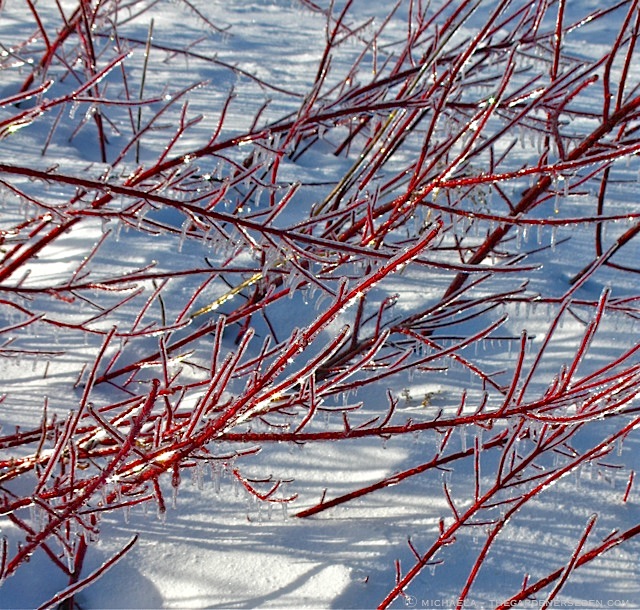
Gardeners fight the winter blues with fiery red twig dogwoods

Red twig dogwoods add a splash of
color to the winter landscape
Winter is the season when the garden sleeps. Green turns to brown and flowers fade. Embracing the season of dormancy doesn't have to mean acceptance of a dreary landscape. Add a splash of color to the winter garden with red and yellow twig dogwoods that are most exciting in dormancy.

Strategically placed, colorful twig dogwoods help break the monotony of evergreen foundation plantings.  Although twig dogwoods are attractive as a specimen plant, they really make a statement en masse.  Plant at the border to create a river of color as a winter hedge.

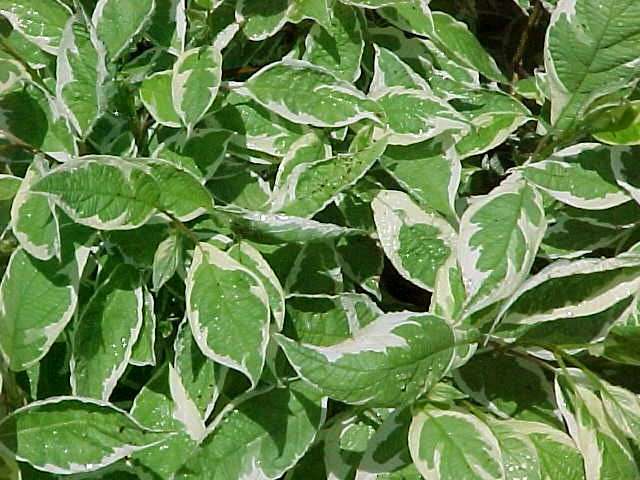
Of all the interesting new varieties out there, my favorite is Cornus alba 'Ivory Halo' (zones 3-7).  While other twig dogwoods tend to be a blob of green during the growing season, variegated foliage makes 'Ivory Halo' an attractive planting for any time of year.

Young dormant stems of 'Ivory Halo' are a fiery red that are an excellent source of winter interest.  For the best stem color, prune out old growth every spring or cut back hard the whole plant every few years.
Variegated foliage makes 'Ivory Halo'
dogwood attractive at any time of year.

Plant dogwoods in the winter when the plant is dormant.  Although dogwoods won't be actively growing leaves and stems in the winter months, roots will anchor into the soil and give the plant a head start on growth in the spring.

Available from many garden centers, a red or yellow twig dogwood will make the perfect holiday gift for any garden enthusiast.

If you have any questions, ideas, or suggestions, leave a comment or shoot me an email.

What's your favorite way to use red or yellow twig dogwoods?  What plants are your favorites for fighting the winter blues?


Fiery stems of red twig dogwoods contrast with white bark of paper birches (Betula papyrifera)
Yellow twig dogwood at the University of Tennessee Gardens.


Photos courtesy of:

Tuesday, November 20, 2012

A Lavender to be Thankful For


Lavenders are picky plants -- especially when grown in East Tennessee.  There's always a reason for lavender not to perform here, whether it's too humid, too cold, too wet, too dry, too shady, too fertile, too much!

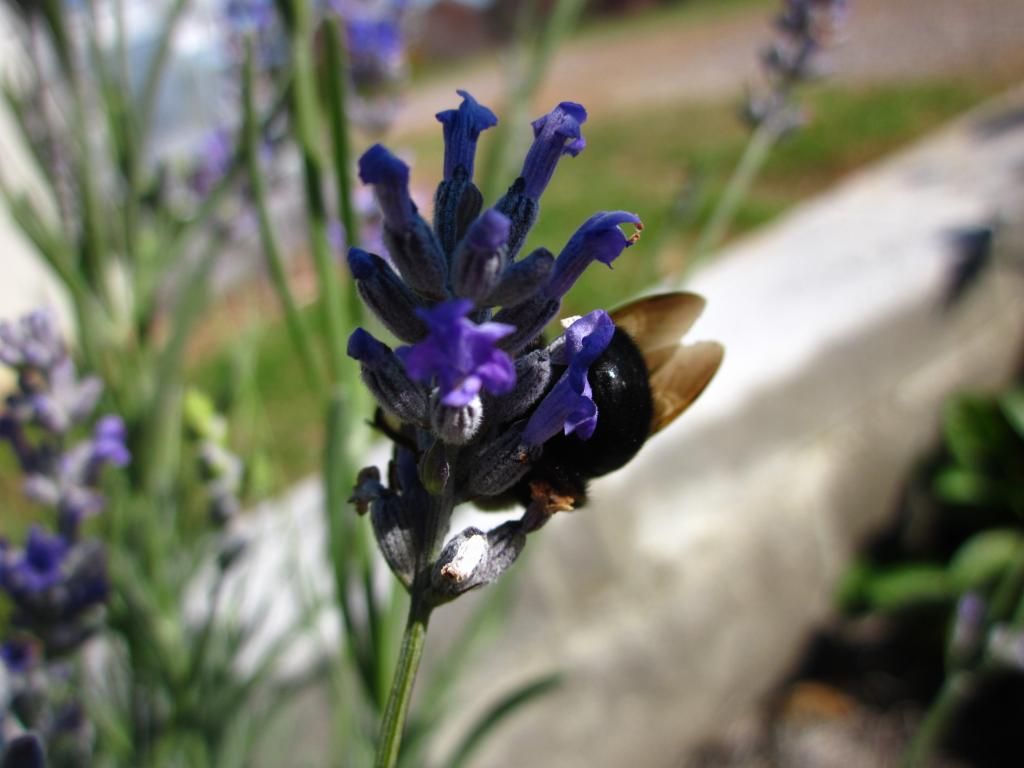
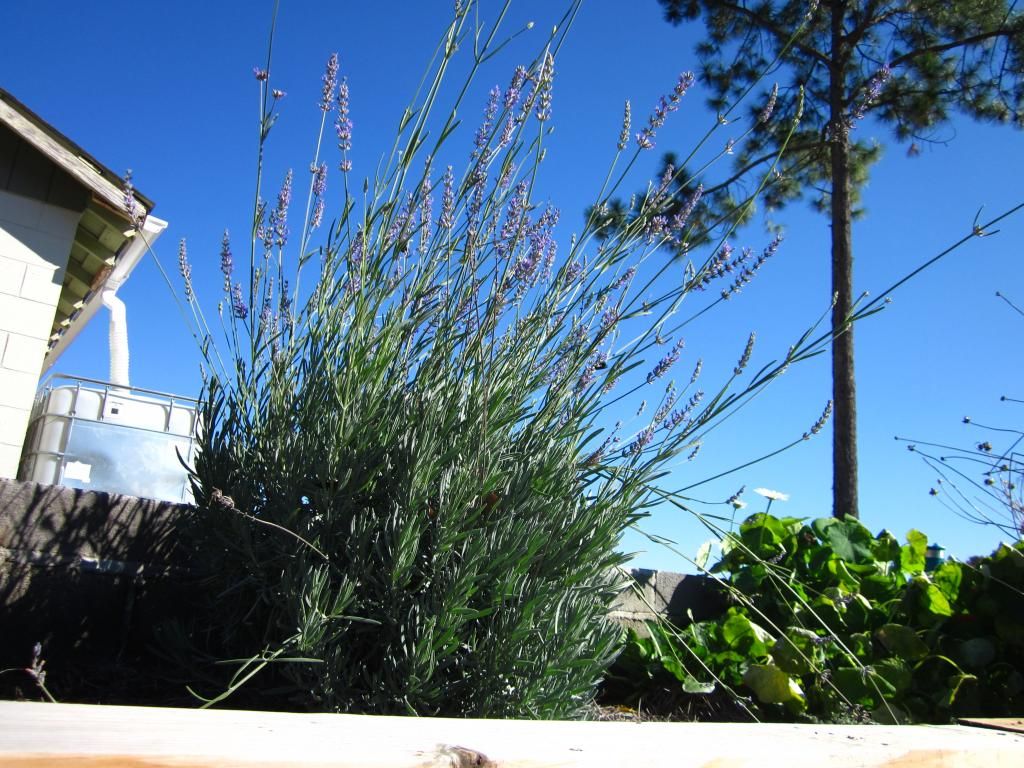
Lavender 'Provence' is special because it performs in spite of the cards that are stacked against it.  The real key to success with 'Provence' is to know when -- and how -- to prune.

'Provence' makes a silver mound that flowers prolifically two or more times a year.  To encourage flowering, plant in full sun and deadhead as flowers go to seed.  When lavender spends less energy developing seeds, it will flower more.

As with any lavender, don't prune in fall or winter.  Leave the plant's "winter coat" to protect the crown and help ensure survival through the cold season.  It's best to cut back after the danger of frost has passed in the spring.  For Knoxville, prune lavender after April 15th.

Cutting back to about 8 inches keeps growth compact and upright, prevents falling into a "donut" shape with an empty center, and limits old growth from turning a dingy brown color.

By pruning 'Provence' lavender a just a few times a year, you'll be rewarded with silver, compact, floriferous, perennial growth.

Like many other herbs, 'Provence' lavender likes to a site with well drained soil and full sun.  Water deeply and regularly for a couple months until the plant is established.  Once the lavender has rooted in, water only as needed.  If 'Provence' is thirsty, its flowers and branch tips will start to droop.

'Provence' makes a statement at entrances or en masse as a hedge.  Silver and purple will really pop against dark colors like 'Black Heart' sweet potato vine or Sedum 'Black Jack'.

With proper siting a maintenance, however you choose to use 'Provence', you'll be sure to have great shape and flowers!

To see more of my photos of 'Provence' lavender, check out my photobucket acccount.

If you have any questions, comments, ideas, or suggestions, I love to get email!

Sunday, November 14, 2010

Sioux Grass Dance Tribute


What is a “Grass Dance”? To me, the phrase conjures up visions of Hawaiian hula dancers, but this was not really the case. Grass dances began with the Sioux nation, which was located in and around what is today the state of South Dakota. The Sioux used grass dances as part of their war ceremony, so essentially at grass dances originated as war dances. Although this was a music associated with war, it spread to from the Omaha, to their neighbors, through the plains, and across North America. Tara Browner in “An Acoustic Geography of Intertribal War Songs, pointed out that these grass dances had in fact “grafted” on to indigenous warrior society.

When the U.S. government formed Bureau of Indian Affairs, one of the bureau’s functions was to limit communication between the groups of native people. The reason was to prevent these nations from organizing greater resistance and attacks, but an indirect result was preventing “cross fertilization” of music between these nations. This means that the grass dance style spread across North America, but then began to evolve with tribes and nations in isolation. This resulted in different styles of grass dances, one of the main differences being the Northern and Southern styles, which were first, observed in the 1920s (Browner). Although grass dances began as war music, in modern times they are more functional as an important part to pow-wows (Gay).

Now that we have a grasp of the history of grass dances, what did they sound like? Again, the image of hula dances comes to mind, but truly the musical style of Sioux grass dances are a far fling from the familiar soft strumming of the ukulele. The example that we listed to in Musicology 115 started out with the male vocalists singing in falsetto. Their sound gets lower, and then the women join in. There was not really any harmony and not many words. Instead of words, these singers used a great deal of vocables. The range of this song didn’t follow the musical scale that we of European descent are familiar with, but rather used a sort of pentatonic scale characteristic of much Native American music (Gay). These songs may be strophic in verse, have internal repetition, and have an energetic beat (Browner). To quote Frances Densmore who founded the Native American collection at the Smithsonian, in the lines of this music one may find a “sense of indefiniteness”.

The musical texture of the example of a grass dance that we heard in class was difficult to determine. One could argue that it was polyphonic (multiple melodies that can be imitative) or that it could be heterophonic (based on simultaneous variation and embellishment of a melody). Dr. Gay argued that the example in class was heterophonic in texture, and I am inclined to agree. This is because variation and embellishment seem to fit right in with Harold Courlander’s description of traditional Sioux music. In “Music of the Sioux and Navajo”, Courlander said that this style of music was “exhibitionistic and individualistic dancing for entertainment”. So, it logically follows that a music characterised by the participants being exhibitionistic and individualistic would fall into a texture described as being based on variation and embellishment.

So, what did a grass dance look like? According to Densmore, the dancers would imitate eagles and other birds. In the grass dances of the Omaha, the leader of high enough rank would “wear ‘the crow’, a decoration of the highest order”. But, this isn’t called the bird dance; it’s called the grass dance. In class we learned that dancers would wear intricate skirts of woven grass (Gay). Densmore went into more detail, describing how each member would carry a long branch of grass. The rank of society the participant was in would determine how this bunch of grass would be braided and attached to the dancer’s waist. Densmore described it of looking something like a tail. The grass’ symbolic meaning in the song was that it represented “abundance and charity” (Densmore).

As a major in plant sciences with a concentration in public horticulture, to me there would be no greater tribute to a musical arrangement than a floral arrangement. My goal was to capture the spirit of this music with plant life. This began with the nation that started these grass dance songs – the Sioux. Their native range was concentrated around South Dakota, spreading into the surrounding states (Hickerson).

For the purpose of this project, I attempted to use vegetation native to the Sioux’s traditional range. For the grass component of the tribute I used Schizachyrium scoparium, which is commonly known as little bluestem. I collected it in a field by my house where with the recent cold snap is has just turned from its fall crimson color to a more sandy color.


The field where I collected the Solidago, Yarrow, and Little Bluestem


I made a hungry friend who kept eating my winterberry holly fruits


Making the arrangement after collecting all the components


Another native plant that I collected from that field is Solidago, or Goldenrod. I collected it in three stages: bright yellow still in bloom, spent flowers that have dried but are still yellow, and big puffy heads that have completely gone to seed. I decided that the tried but still yellow flowers worked best for the creative purpose of this project. In the arrangement itself, the goldenrod represents the male voice in the song – starting in a high falsetto and falling in the arrangement.

A third native plant from that field is Achillea millefolium, or Common Yarrow. At this point, the flowers had been spent, but they left very interesting and architectural seed heads. I added them into the arrangement to add some nice texture, the way that the female voices added to the texture of the Grass Dance song.

Finally, to symbolize the drums in this arrangement I used the yellow leaves of Acer saccharum or the familiar Sugar Maple. I placed them around the inside of the vase, the same way that the drums were constant throughout the song. The leaves also served well in hiding the unsightly stems that could be seen through the clear vase.

This left the arrangement looking somewhat bland and just too yellow, so for color I incorporated some plants that are native to the U.S. but not necessarily to South Dakota. I feel that this is alright because the Grass Dances spread throughout North America and are used in pow-wows of North American nations where these plants are native to. These include Illex verticillata or Winterberry Holly, which had red berries that really brightened up that base. To add some red to the top of the arrangement it chose Cornus sercia or a Red Twig Dogwood. This helped the red of the berries flow better throughout the arrangement.

Because European technology is what captured and recorded this and other grass dance songs, I attempted to symbolize that in my arrangement. The vase that is holding the arrangement is a glass vase, something the Native Americans did not have or use. I began to research what sort of vases that were popular with white Americans during the 1920s (the time period that Alice Fletcher and Frances Densmore were researching the Sioux and other native peoples). In the end, I simply used a glass vase that was already in my possession, because as an undergraduate student I do not have the time to do any extensive antiquing or the monetary resources to buy an antique vase.

The final result was an attractive, colorful, fall dried floral arrangement that I feel is a nice tribute to the Sioux Grass Dance song. In fact, my Souix Grass Dance tribute was so pretty that it is currently on display in my apartment as part of my fall festive décor.


Works Cited


Browner, Tara. “An Accoustic Geography of Intertribal Pow-wow Songs”. Music of the First Nations: Tradition and Innovation in Native North America. Chicago: University of Illinois Press, 2009. 131-140.


Courlander, Harold. “Music of the Sioux and Navajo”. Ethnic Folkways Library Album no. FE 4401. New York: Folkways Records and Service Corp, 1949.


Densmore, Frances. Teton Sioux Music. New York: Decapo Press, 1972. 468 - 484.


Gay, Leslie. Musicology 115 Lecture. Personal Communication. 25 August 2010.


Hickerson, Harold. Sioux Indians I. New York: Garland Publishing Inc., 1974. 30.

Monday, April 20, 2009

Old Hat or All That?

On this plant list in particular and also throughout the semester there have been a few plants labeled something like, "Plants You May Find In Your Grandma's Yard" or as Michael Dirr may say "The Over The Hill Gang". These are the plants that used to be really popular but were eventually replaced with newer, more trendy plants. As a landscape designer, horticulturalist, or someone in production, hearing this information in class may have deterred you from ever using these "stale" old plants in any area. After all, this seems to be a strategy many professionals seem to be taking since really, these plants don't appear in modern landscapes hardly at all.

As someone kind of partial to these old favorites, here's a few exciting varieties worth taking a second look at:

Syringa vulgaris or Common Lilac: The straight species of this in renouned for its intensely fragrant flowers, and great lilac spring color. But, it is also scraggly, prone to mildews and diseases, and confusing when it comes to pruning. Cultivars such as 'Little Boy Blue' (blue) and 'Prarie Petite' (pink) have a more compact habit which makes it more versatile in the landscape. 'Prince Wokonsky' has double flowers, and 'Elsa Maasik' (deep purple) is more disease resistant than the straight species. 'Albert F. Holden' is bicolor.


Chaenomeles speciosa or Common Floweringquince: This may be dismissed as too scraggly or wild, but the flower show is what really makes planting a Floweringquince worth it. Going from there, lots of different flowering varieties have been released covering the gamete between white and dark red. 'Jet Trail' (white), 'Minerva' (red), and 'Texas Scarlet' (red) are a few of the more compact varieties if the Floweringquince's legginess is too much for you. 'Scarff's Red' is a thornless variety available, although the thorns may come in handy for a barrier or hedge.


Spirea prunifolia or Bridalwreath Spirea: ... Ok that one may not have any hot new varities, but take a look at it at this time of year. Its one of the greatest for full white spring flowering, and attracts tons of wildlife including honeybees and ladybugs (both of which are necessities for any healthy garden). And the rest of the year, it makes a nice green mounded background for your summer and fall flowering colors.


Sources:

Dirr, Michael A. Manual of Woody Landscape Plants. 215-216, 962-963, 986-991
Common Lilac picture 'Albert F. Holden' from http://www.naturehills.com/images/productImages/SyrvulgAlbertFHoldenLilacviolet_big.jpg
Floweringquince picture 'Texas Scarlet' from http://www.jparkers.co.uk/images/new_products/ST0403.JPG
Bridalwreath Spirea picture from http://www.donnan.com/images/SpireaBridalWreath.jpg